
Product Serialization Explained: How Serialized Data Connects Products, Systems, and Supply Chains
By Covectra | Posted on December 16, 2025
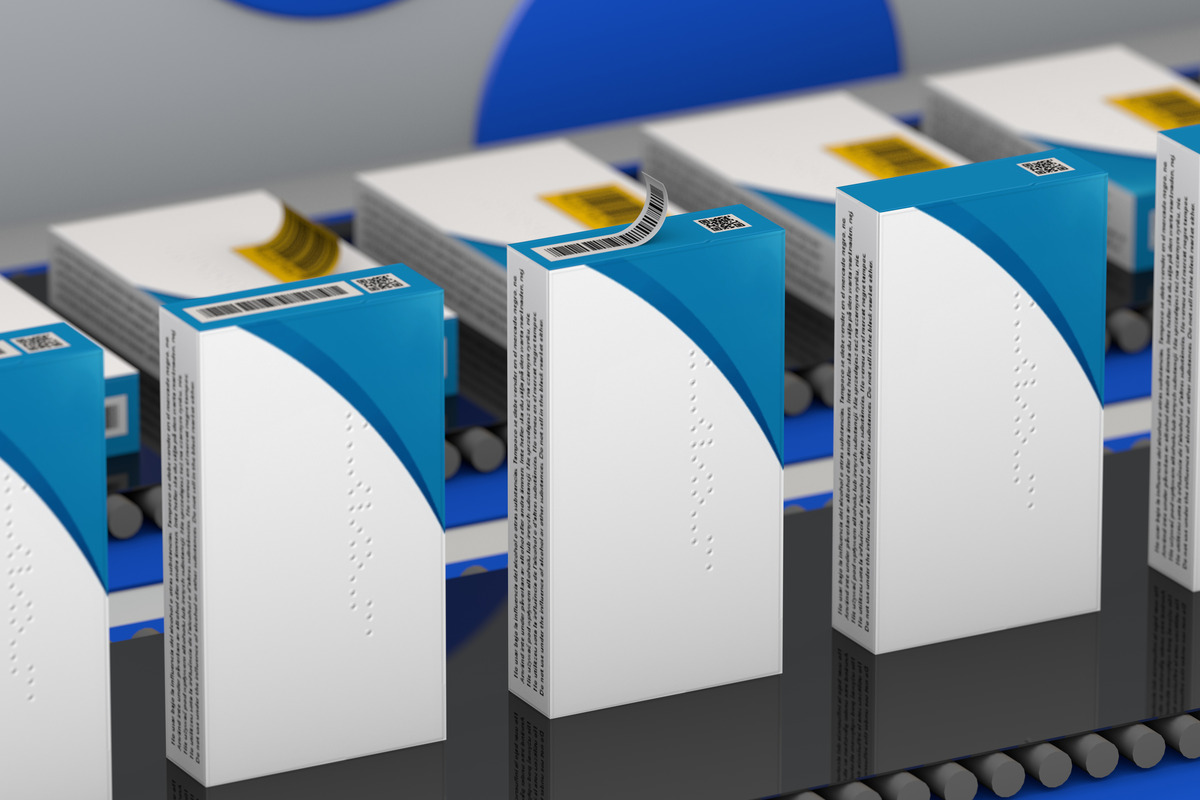
Product serialization is often described as assigning a unique identifier to each product. That description is technically accurate, but incomplete.
In real operations, serialization functions as a coordination layer. It connects physical product handling on the packaging line with digital records that move across internal systems and external trading partners. Once a serialized identifier is created, it is reused, referenced, and validated repeatedly as product changes hands.
For organizations operating at scale, serialization decisions made early in the process shape how reliably product data moves long after packaging is complete.
This post looks at product serialization from an operational perspective, including:
- How serialized identifiers connect physical product and digital records
- Why serialization behaves as a system rather than a discrete task
- How serialized data is reused across supply chain events
- Where serialization friction commonly appears across industries
- How serialization requirements differ between regulated and brand-driven markets
Key Takeaways
- Product serialization establishes a unique identity for each saleable unit and connects that identity to multiple downstream processes.
- Serialized identifiers are reused across systems and workflows, including packaging, aggregation, shipment, receiving, and verification.
- Different industries apply serialization under different pressures, such as regulatory compliance, recall readiness, and brand protection, even though the core mechanics are consistent.
- Issues with serialization commonly trace back to misalignment between packaging activity and the associated records, not a single isolated error.
- Serialization matters beyond compliance because its outputs are reused repeatedly, and problems that aren’t detected early tend to require manual resolution later.
What Is Product Serialization and Why Does It Matter?
At its most basic level, product serialization assigns a unique identifier to each saleable unit of product. In many industries, that identifier is encoded in a machine-readable format such as a 2D DataMatrix, QR code, or RFID tag.
The identifier typically includes:
- A product identifier (such as a GTIN or NDC)
- A serial number
- Lot or batch information
- An expiration or production date, where applicable
What gives serialization its operational weight is not the identifier itself, but how that identifier is reused across processes. Once assigned, the same identifier follows the product through commissioning, aggregation, shipping, receiving, verification, and—when applicable—returns or investigations.
Serialization works when that continuity holds.
Product Serialization as a Supply Chain System
Serialization touches multiple functions at once, spanning more than labeling or data capture. It includes
- Packaging engineering, where identifiers are applied and verified
- IT systems, where serialized data is generated, stored, and exchanged
- Quality teams, who rely on serialized records during investigations
- Supply chain partners, who validate and reference serialized data downstream
Because serialized identifiers are reused rather than recreated, serialization behaves as a system. Decisions made at one stage—such as how identifiers are commissioned or how aggregation is captured—affect every subsequent interaction with that product.
This interconnected behavior explains why serialization issues often appear later than they are introduced.
How Serialized Identifiers Move Through the Supply Chain
Once a product leaves the packaging line, the serialized identifier continues to be referenced at multiple points:
- During aggregation into cases or pallets
- When shipment events are recorded
- At receiving, where physical scans are compared against expected data
- During verification requests, audits, or investigations
Each interaction relies on the same identifier remaining consistent across physical handling and digital records. A mismatch does not reset automatically; it carries forward.
As serialized products move between organizations, the identifier becomes a shared reference point. That reuse is what enables traceability, but it also amplifies inconsistencies when they occur.
How Serialization Requirements Differ by Industry
Serialization exists across many industries, but the operational pressures placed on serialized identifiers vary depending on regulatory oversight, distribution complexity, and tolerance for downstream disruption. While the mechanics of serialization may look similar on the surface, the consequences of misalignment differ by market.
Pharmaceuticals
In pharmaceutical supply chains, serialized identifiers are reused across multiple regulated interactions, including aggregation, shipping, receiving, and verification. Downstream partners routinely validate serialized data against expected records, which means inconsistencies are often detected quickly but can halt product movement until resolved. As a result, pharmaceutical serialization places sustained pressure on alignment between packaging activity and serialized records.
Animal Health
Animal health supply chains often span multiple regions and regulatory environments, with distribution models that differ from human pharmaceuticals. Serialized identifiers support traceability and product integrity, particularly for higher-risk therapies, but may encounter greater variability in how data is exchanged and validated. Serialization programs in this space often account for diverse partner capabilities and cross-border product movement.
Food and Beverage
In food and beverage, serialization and related traceability practices operate under tight time constraints. Products move rapidly through distribution, and recall scenarios require quick identification and response. Serialized identifiers are often referenced in high-volume, time-sensitive workflows, placing emphasis on scan reliability and speed rather than extended downstream validation cycles.
Consumer Products
In consumer goods markets, serialized identifiers are frequently used beyond traditional logistics environments. Products may be scanned by channel partners, field teams, or consumers, extending identifier use into uncontrolled conditions. This broad exposure places additional pressure on label durability, consistent data interpretation, and the ability to distinguish authentic products from imitations or diverted goods.
Automotive and Industrial Goods
In automotive and industrial contexts, serialized identifiers often remain relevant long after initial distribution. Identifiers may be referenced during maintenance, warranty claims, safety recalls, or service events, requiring serialization data to remain accurate and accessible over extended periods. The emphasis is less on transaction speed and more on long-term continuity between physical parts and historical records.
Across industries, serialization succeeds when identifiers remain usable and interpretable across systems and organizations—but the conditions under which that continuity is tested vary widely.
Common Points of Failure in Serialization Workflows
Serialization issues rarely stem from a single failure point. They typically arise when physical packaging activity and digital serialization records do not remain aligned.
Misalignment Between Commissioning and Printing
Commissioning systems allocate unique serial numbers to specific products, but packaging lines must apply those identifiers accurately and at the correct time. Problems occur when:
- commissioned serials do not match what is printed on the line
- printers reference cached or previously queued data
- label templates do not reflect current product configurations
In these cases, identifiers may scan correctly but still fail later validation because the printed data does not match the commissioned record.
Aggregation That Does Not Reflect Physical Reality
Aggregation depends on accurate capture of parent–child relationships between units, cases, and pallets. Problems typically trace back to situations where:
- units shift during packing and are missed during aggregation
- scans fail at certain angles or positions
- aggregation records are generated automatically without confirming physical composition
Once aggregation data diverges from how products are actually packed, downstream systems encounter inconsistencies that are difficult to reconcile after the fact.
Environmental and Handling Variability
Serialized identifiers often perform differently depending on where and how they are scanned. Factors such as surface materials, lighting conditions, movement speed, and handling equipment can affect scan reliability.
A label that scans successfully on the packaging line may fail during case-level aggregation or distributor receiving under different conditions. These failures are not always detectable at the point of application.
How Serialized Data Is Shared and Interpreted Across Organizations
Once serialized data moves beyond internal systems, it must be interpreted by external parties. Data-exchange standards provide a structured way to represent events such as commissioning, aggregation, shipping, and receiving, allowing different organizations to interpret the same identifiers consistently.
These standards function as a shared reference rather than a shared system. Each trading partner relies on its own infrastructure to validate incoming data against what is physically scanned.
When serialized identifiers remain aligned with packaging activity, data exchange proceeds without added intervention. When misalignment exists, discrepancies emerge during validation and often require coordination across multiple teams and organizations to resolve.
Why Serialization Issues Tend to Appear Downstream
Serialized identifiers are long-lived. They are created early in the process but referenced repeatedly as products move through distribution.
Each downstream interaction—receiving, verification, investigation, or return processing—places the identifier under another check. As a result, inconsistencies that were not visible during packaging or aggregation may become apparent later, when the product is no longer easily accessible.
This behavior explains why serialization programs frequently encounter issues during downstream workflows, even when contributing factors were introduced earlier.
What Effective Serialization Programs Account For
Serialization programs that perform reliably over time tend to account for several structural realities:
- serialized identifiers are reused across multiple events
- physical handling and digital records must remain aligned
- data must be interpreted consistently across systems and partners
- volume and variability expose edge cases that isolated tests do not
Treating serialization as shared infrastructure—rather than a single compliance activity—helps organizations account for these conditions and reduce recurring friction across the supply chain.
How Covectra and AuthentiTrack Support Serialization Across Industries
Covectra supports serialization programs through AuthentiTrack, its single-source serialization platform designed to keep identifiers consistent from the packaging line through downstream data exchange.
AuthentiTrack supports serialization use cases across regulated and brand-driven industries by providing:
- Centralized identifier generation and management
Serial numbers are created, controlled, and reused from a single authoritative source. - Tight coupling between packaging activity and serialized data
Commissioning, printing, aggregation, and hierarchy creation reference the same underlying records. - Support for regulatory and brand-protection requirements
AuthentiTrack is used for DSCSA compliance in pharmaceuticals and animal health, as well as serialization-driven brand protection in consumer and industrial markets. - Scalability across packaging environments and risk profiles
The platform supports high-volume pharmaceutical lines, distributed animal health networks, and consumer-facing serialization programs where identifiers may be scanned well beyond logistics operations.
By reducing system handoffs and controlling how serialized identifiers are created and reused, AuthentiTrack helps organizations maintain continuity between physical product handling and serialized records over time.
Talk with Covectra About Your Serialization Program
Serialization programs succeed when identifiers remain usable across packaging operations, internal systems, and external partners. AuthentiTrack is designed to support that continuity across industries where serialized data must hold up long after packaging is complete.
To discuss how AuthentiTrack supports product serialization in regulated and brand-driven markets, contact us at Covectra today.
FAQ: Product Serialization
How long does a serialized identifier remain relevant?
A serialized identifier may be referenced multiple times throughout a product’s lifecycle, including after distribution during returns, audits, or investigations.
Does product serialization always require regulatory mandates?
No. Many organizations use serialization for brand protection, recall readiness, and product authentication independent of regulatory requirements.
Where do serialization issues usually become visible?
Issues often appear during downstream validation steps such as receiving or verification, even when contributing factors occurred earlier.
Can serialization requirements differ within the same organization?
Yes. Organizations operating across multiple industries or regions often manage different serialization expectations within a single infrastructure.
Read More
Serialization in Pharma: Driving Compliance, Safety, and Traceability
What Is Pharmaceutical Serialization and Why Is It Critical Today
How Counterfeit Technology Protects the Pharma Supply Chain and Beyond